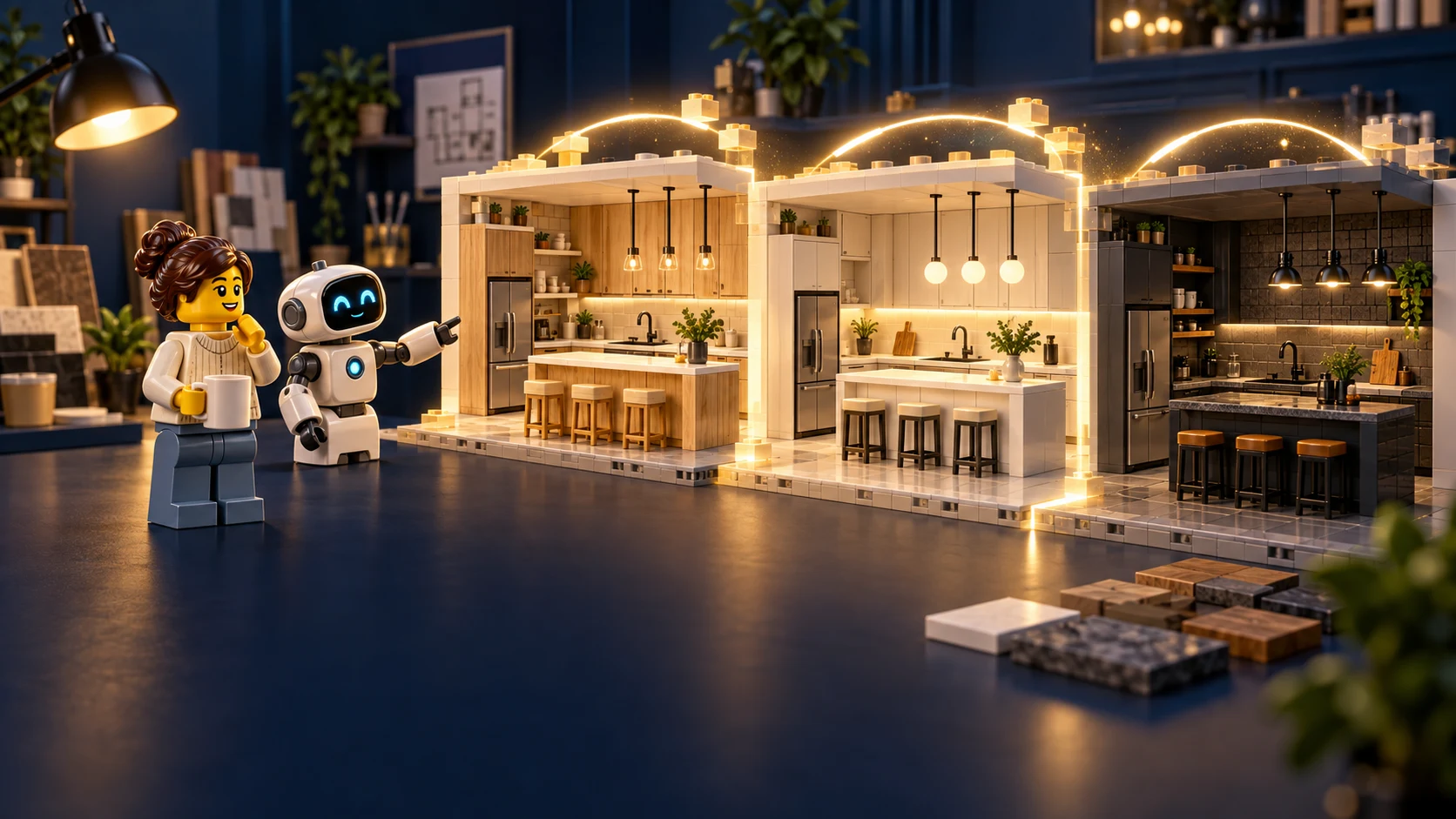
I gave ChatGPT a photo of my kitchen. Then I asked it to redesign it in 8 different styles.
There’s this stage before a renovation.
You look at your home. At the kitchen. At the living room. At that empty wall you’ve been saying you’ll do something about for two years.
And you try to imagine.
What if we swapped the cabinet fronts? Went with light wood? Did a dramatic stone? Brought in some bronze? Went more minimal? Or the opposite - something warm, Mediterranean, like a vacation home?
The problem is, imagining is hard.
Pinterest helps, but it’s not your home. Instagram inspires, but it’s not your kitchen. An interior designer can help a lot, but that’s already a later stage. With money, decisions, time, measurements, contractors. And before you spend a cent, you don’t even know what you want.
So I tried something simple.
I took one photo of my kitchen. And uploaded it to ChatGPT.
The goal wasn’t to get a work plan for a contractor. Not a bill of quantities. Not real material selection. Not a substitute for an interior designer.
The goal was different: to get a feel.
To see how the exact same space can feel in a few different directions.
Same kitchen. Same shooting angle. Same structure. Same window. Same island.
Just a different style.
And in my view, that’s one of the most interesting uses of AI image generation - not because it replaces professionals, but because it helps you figure out what you even want.
The original photo
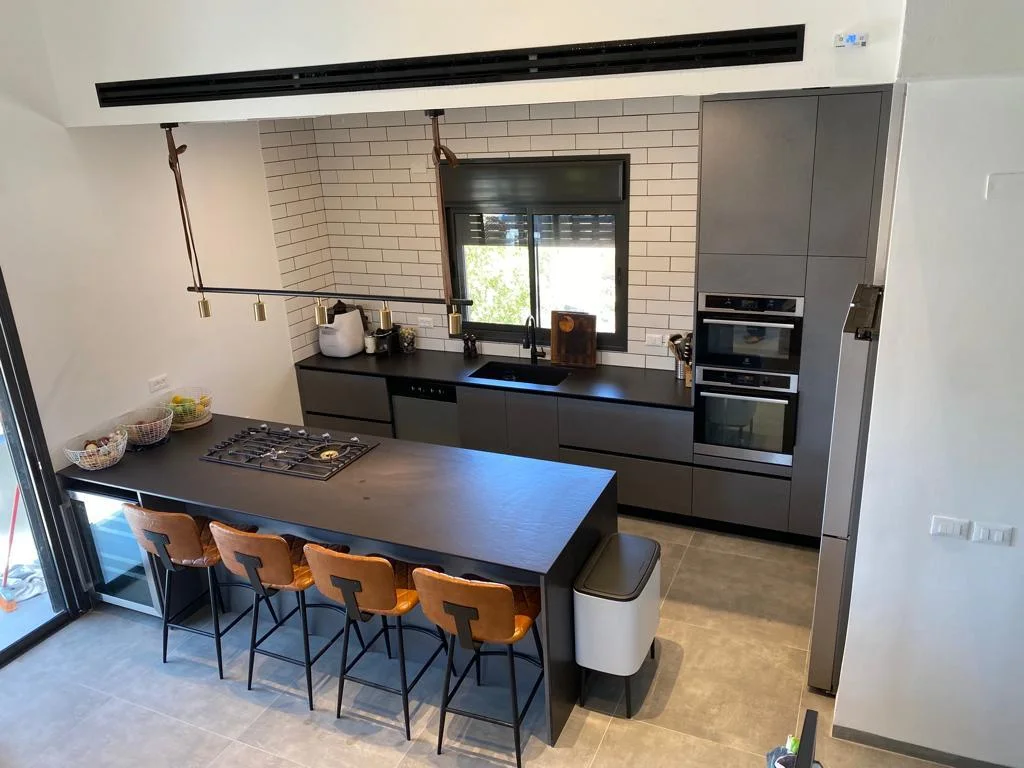
Modern kitchen, clean, relatively dark. Black granite, gray fronts, cognac leather chairs, white subway tiles.
Nothing wrong with it.
But like many spaces at home - it has lots of options. You can take it warmer, more luxurious, calmer, brighter, more dramatic, more natural.
And that’s where the experiment comes in.
The important thing in the prompt - no one talked about it
A lot of people think the trick is just to write:
“Make it Scandinavian”
Not enough.
Because if you don’t tell the model what to keep, it might invent a whole new room. Move windows. Change walls. Swap perspective. Turn the kitchen into a space that doesn’t actually exist.
So the key part of the prompt isn’t just the style - it’s separating two things:
What stays fixed. And what’s allowed to change.
In all my prompts I asked to keep: architecture, structure, proportions, windows, doors, camera angle.
And to change only: furniture, materials, colors, lighting, textures, accessories, atmosphere.
That’s the whole difference.
1. Luxurious Photorealiztic Mid-Century Modern
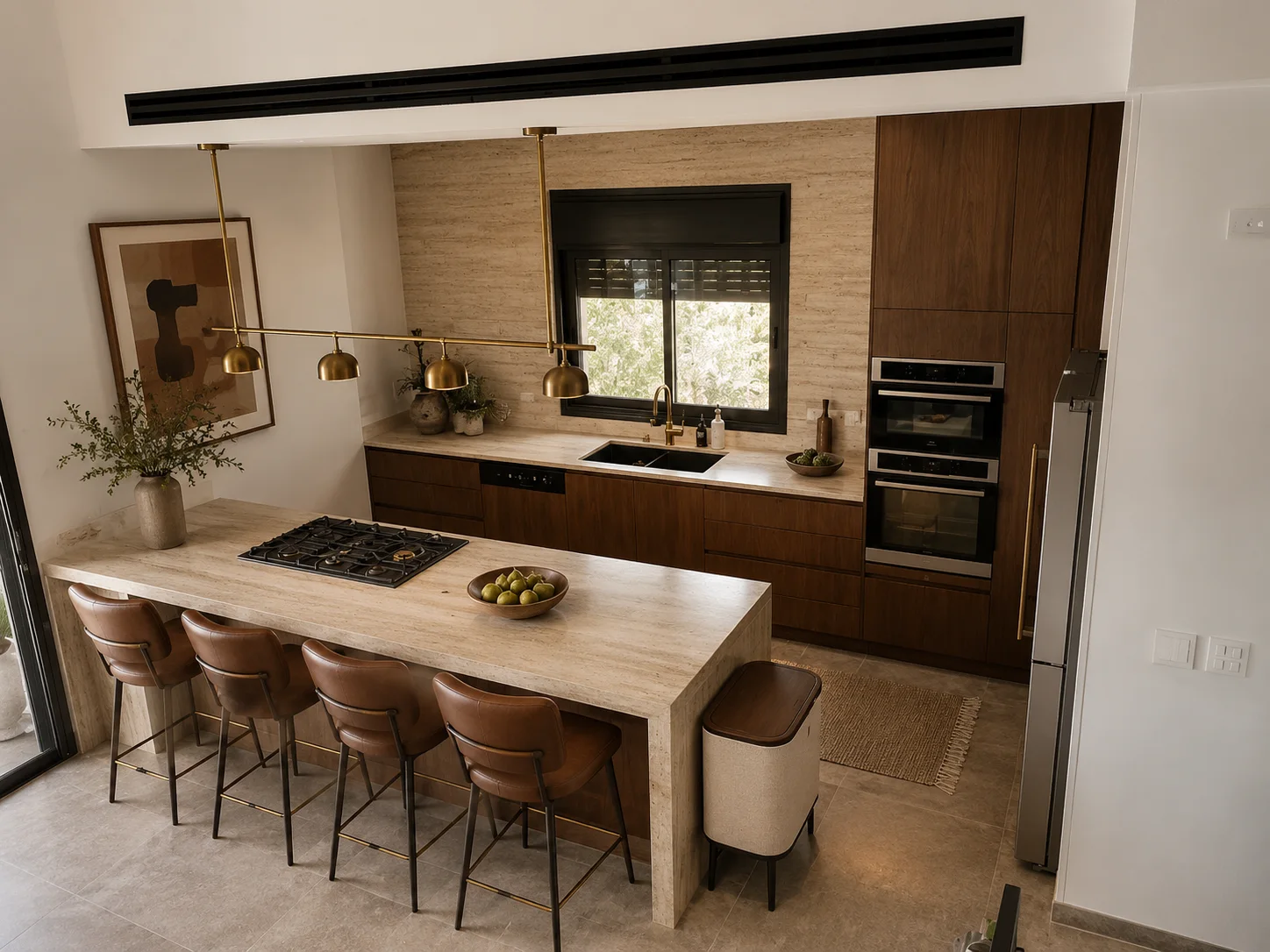
This is the first direction.
Warmer. Richer. More design-magazine.
The dark wood, the travertine, the brass, and the leather chairs give the kitchen a much more luxurious - but still homey - feel. It doesn’t feel like a detached fantasy. It feels like a plausible version of the same kitchen, just with a different budget and sharper taste.
The prompt:
Transform the existing room into a luxurious photorealistic mid-century modern interior. Keep the original architecture, room proportions, windows, doors, camera angle, and perspective intact. Redesign the space with refined mid-century furniture, warm walnut wood, travertine, brushed brass, leather, linen, bouclé upholstery, sculptural lounge chairs, a low-profile sofa, a textured wool rug, curated art, and minimal ceramic decor. The atmosphere should feel warm, sophisticated, and expensive, with bright natural daylight, soft cinematic shadows, and rich texture detail. The result should look like a high-end editorial interior photograph, not a render. Avoid altering the room structure, avoid clutter, avoid exaggerated luxury, and avoid artificial-looking materials.2. Industrial Loft
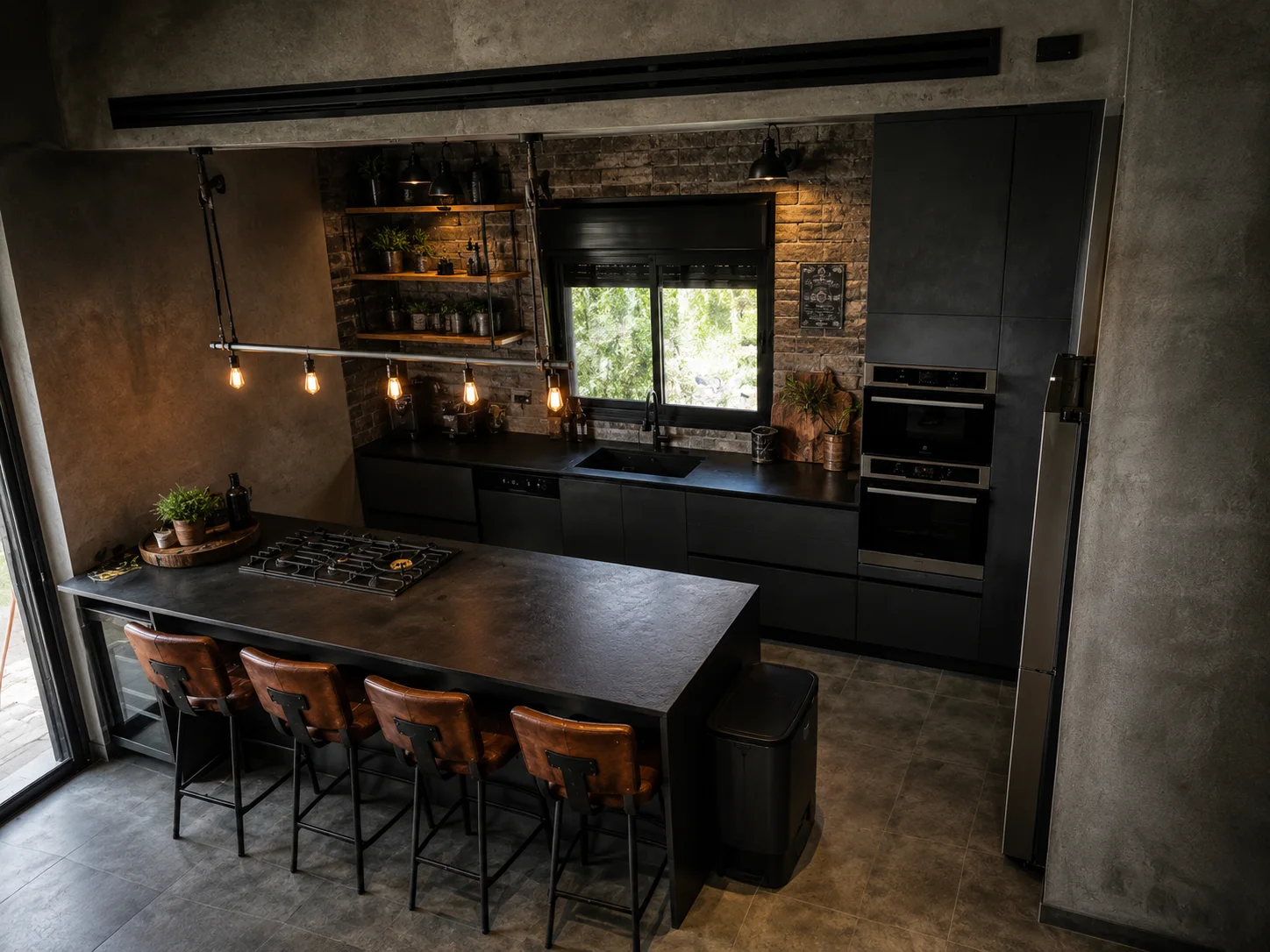
This is the darkest direction in the experiment - in a good way.
Concrete. Steel. Raw wood. Edison bulbs. Dark leather.
Same kitchen exactly, but suddenly it feels like a Manhattan loft. The kind I can totally picture Harvey Specter from Suits living in.
This style surprised me the most. It doesn’t try to prettify the space - it gives it character. And it works.
The prompt:
Transform the existing room in the image into an Industrial Loft interior. Preserve the original architecture, room layout, walls, windows, doors, ceiling height, camera angle, and perspective. Redesign only the furniture, decor, lighting mood, color palette, and material finishes.

Use black steel details, reclaimed wood, exposed concrete or brick textures, leather seating, industrial lighting, darker neutral tones, open shelving, and bold utilitarian furniture. The room should feel urban, raw, stylish, and grounded. Use natural daylight mixed with a moody editorial atmosphere, with realistic shadows and visible texture. The final image should be photorealistic, like a high-end editorial interior photograph.

Avoid changing the structure of the room, avoid making it look abandoned, avoid excessive mess, and avoid fake CGI textures.
3. Scandinavian
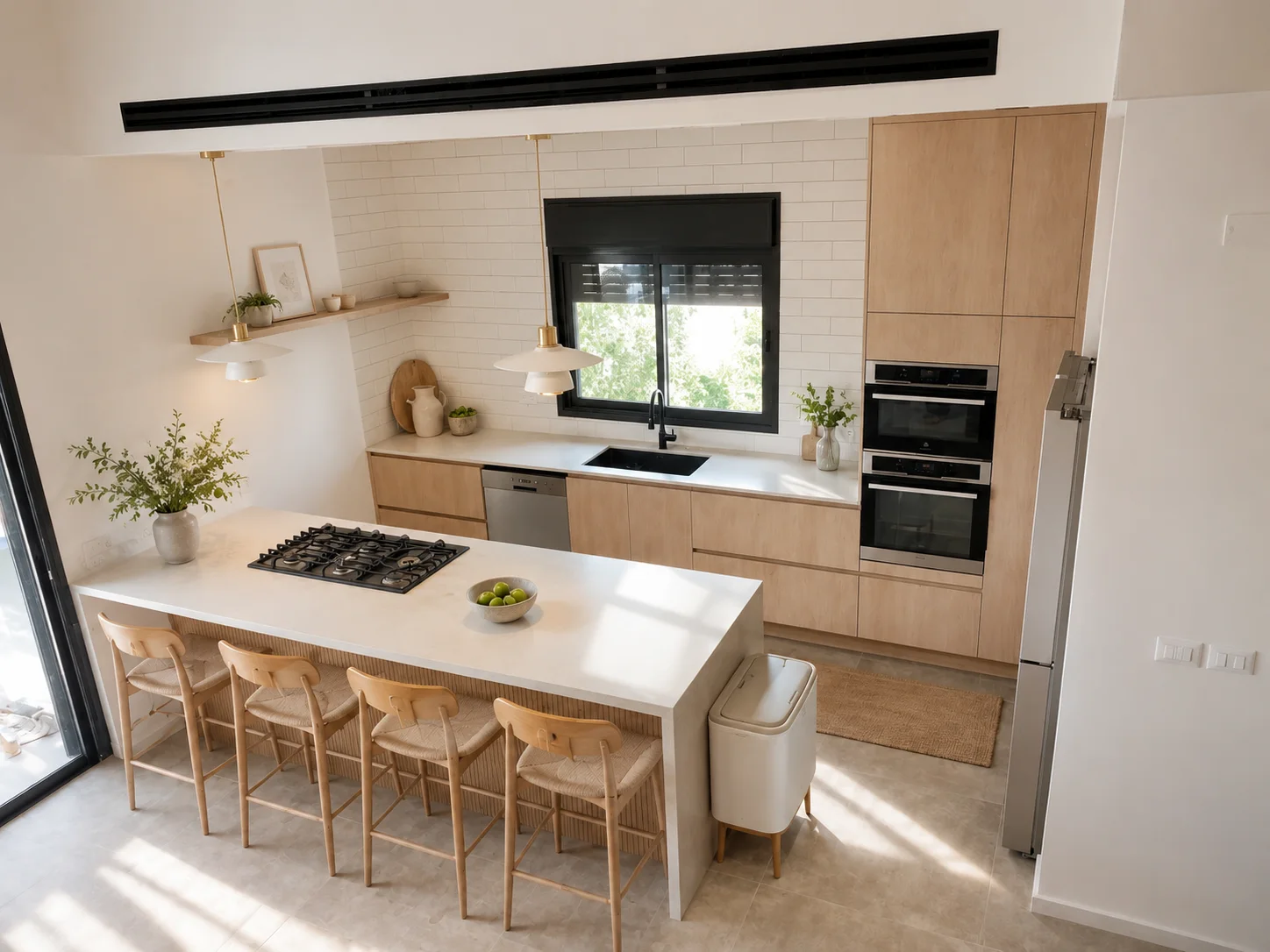
Here the kitchen suddenly becomes much calmer.
Bright. Clean. Simple. Breathing.
The light wood, the white, the lightweight chairs, the soft lighting, and natural textiles turn the same space into something much more family-friendly and gentle.
A great style if you want a home that feels tidy, but not cold.
The prompt:
Transform the existing room in the image into a Scandinavian interior. Preserve the original architecture, room layout, walls, windows, doors, ceiling height, camera angle, and perspective. Redesign only the furniture, decor, lighting mood, color palette, and material finishes.

Use pale oak wood, soft white walls, light gray and beige textiles, clean-lined furniture, minimal shelving, cozy throws, wool rugs, simple ceramic decor, and subtle black accents. The space should feel bright, calm, airy, and functional. Use natural daylight with soft shadows to highlight the clean materials and textures. The final image should be photorealistic, like a high-end editorial interior photograph.

Avoid changing the structure of the room, avoid visual clutter, avoid overly cold styling, and avoid artificial-looking materials.
4. Japandi
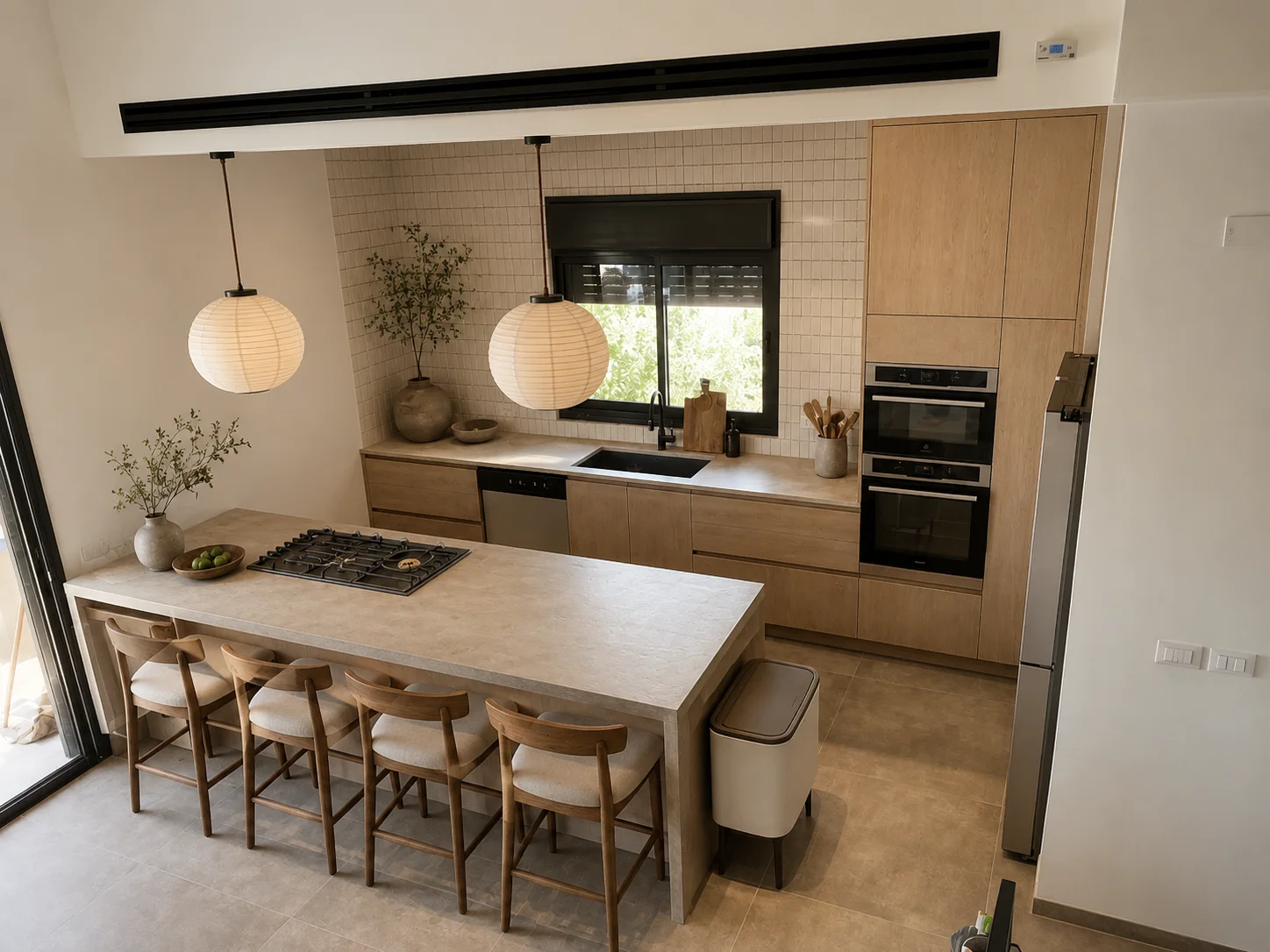
This is probably one of the best directions in the experiment.
It has quiet.
Natural wood, soft colors, paper light fixtures - everything minimal, but not empty.
It’s not a “white kitchen.” It’s a kitchen that tries to lower noise.
And this is exactly where ChatGPT can help in a way Pinterest can’t. Pinterest shows you pictures of other people’s homes. ChatGPT shows you a picture of your home - with that style. It’s amazing.
The prompt:
Transform the existing room in the image into a Japandi interior. Preserve the original architecture, room layout, walls, windows, doors, ceiling height, camera angle, and perspective. Redesign only the furniture, decor, lighting mood, color palette, and material finishes.

Use warm natural wood, low-profile furniture, soft beige and taupe tones, linen fabrics, paper or woven lighting, handcrafted ceramics, minimal decor, and organic textures. The room should feel serene, balanced, refined, and grounded. Use soft natural daylight with gentle shadows to emphasize the simplicity of the space and the texture of the materials. The final image should be photorealistic, like a high-end editorial interior photograph.

Avoid changing the structure of the room, avoid excessive decor, avoid bright saturated colors, and avoid anything flashy or artificial.
5. Mediterranean Organic
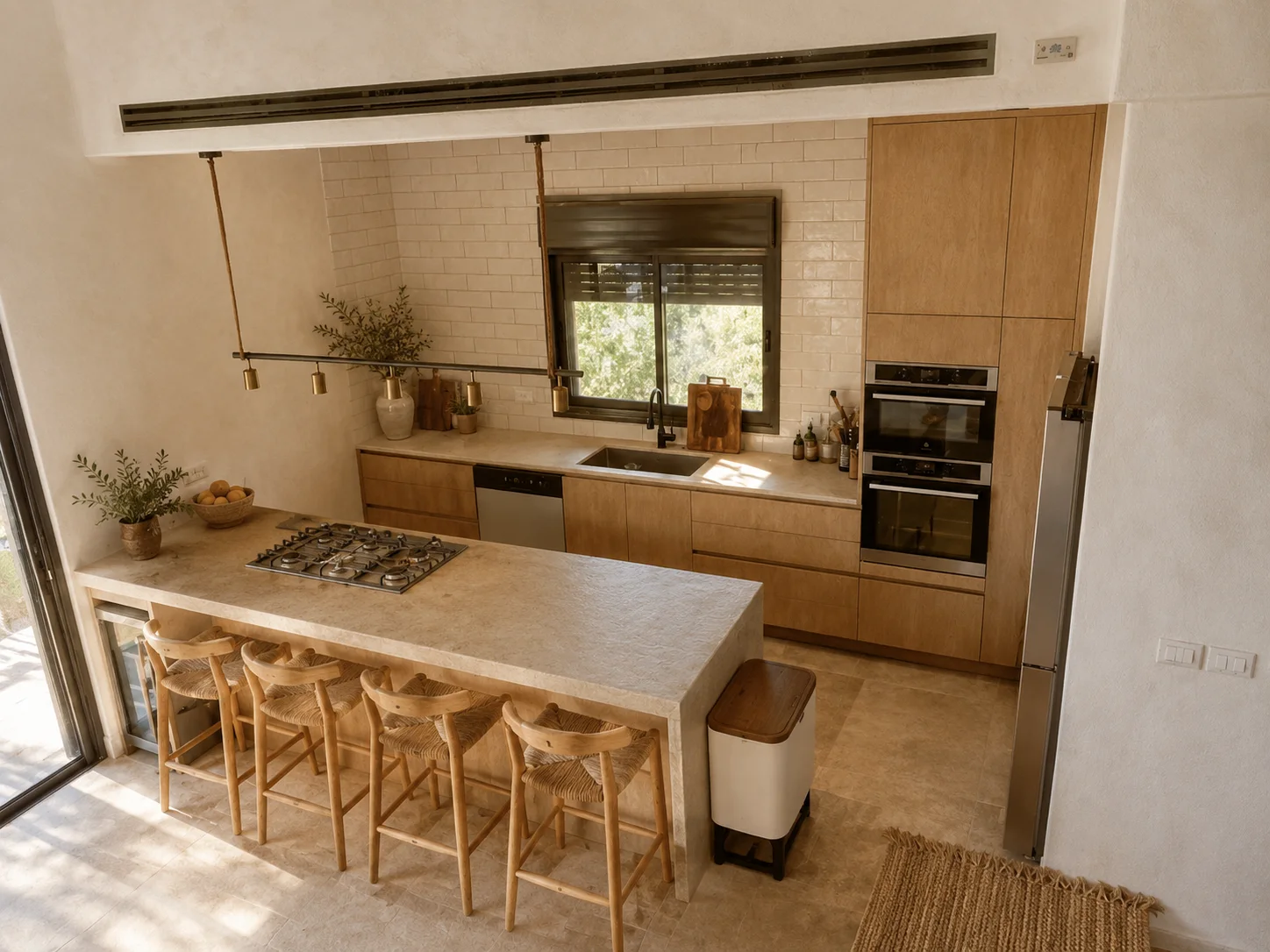
Here the kitchen takes on a totally different feel.
More sun. More sand. More vacation. More natural material.
The walls, tiles, wood, chairs, and warm light create something that feels Mediterranean - but not heavy.
It’s not a “Greek Pinterest house.” It’s still the same kitchen. Just a different vibe.
And somehow, seeing this version makes you realize the original kitchen could have been much brighter - we just chose otherwise.
The prompt:
Transform the existing room in the image into a Mediterranean Organic interior. Preserve the original architecture, room layout, walls, windows, doors, ceiling height, camera angle, and perspective. Redesign only the furniture, decor, lighting mood, color palette, and material finishes.

Use warm white and sand tones, limewash or plaster-like wall finishes, rustic wood, natural stone, linen upholstery, woven accents, handmade pottery, textured rugs, and simple organic furniture. The room should feel sun-washed, earthy, relaxed, and inviting. Use bright natural sunlight with soft warm shadows to highlight the texture of the materials. The final image should be photorealistic, like a high-end editorial interior photograph.

Avoid changing the structure of the room, avoid heavy ornamentation, avoid overly glossy finishes, and avoid anything that feels synthetic or over-styled.
6. Contemporary Luxury
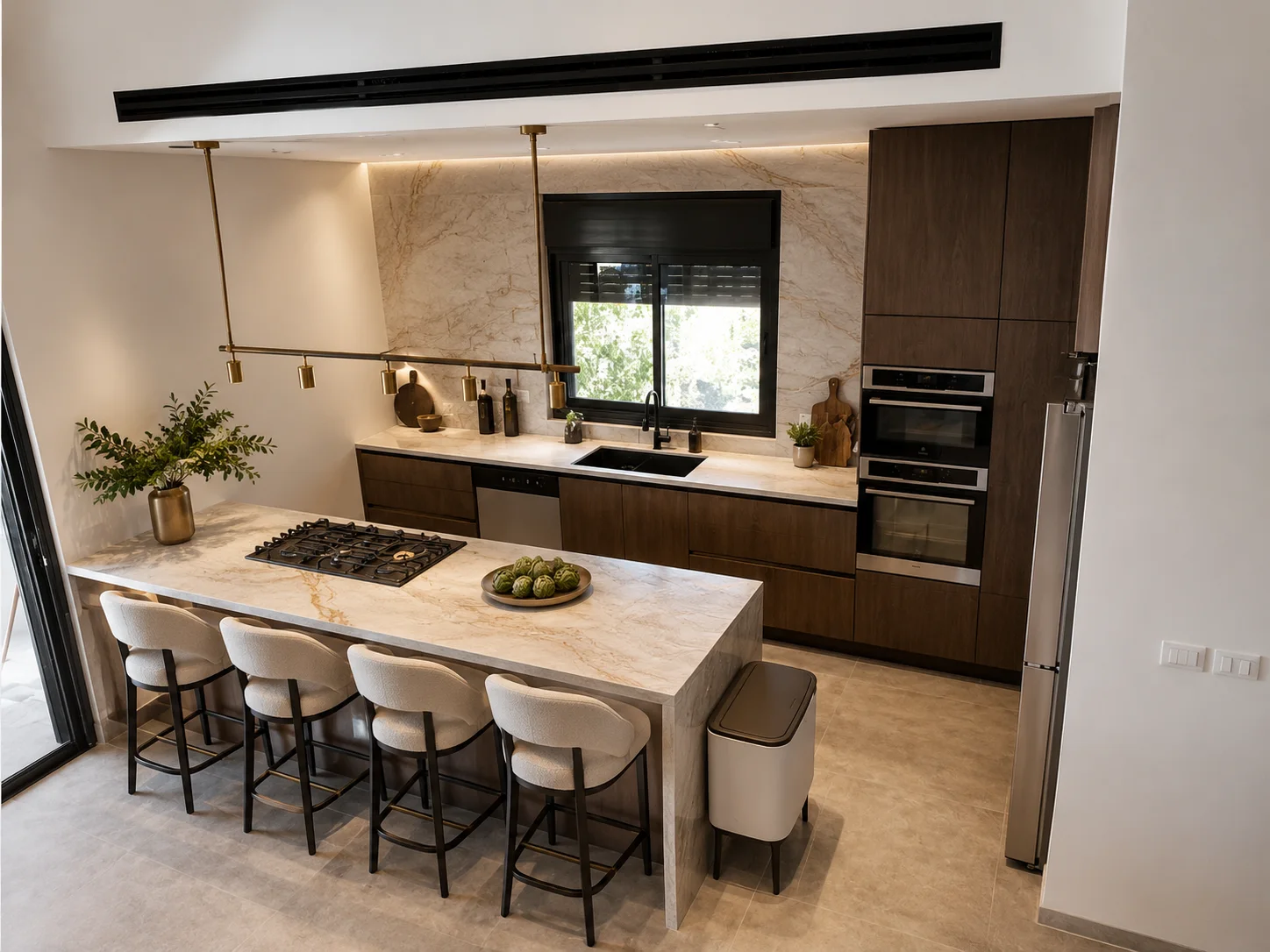
Here we pushed it more premium.
Dramatic stone. Dark wood. Concealed lighting. More luxurious chairs. The feel of a luxury apartment.
Not necessarily a style everyone wants at home. But it’s great for seeing what happens when you push the kitchen toward something more elegant and polished.
Personally, I liked this image. Not sure I’ll change anything because of it - but the little “wow” I had the first time I saw it was enough.
The prompt:
Transform the existing room in the image into a Contemporary Luxury interior. Preserve the original architecture, room layout, walls, windows, doors, ceiling height, camera angle, and perspective. Redesign only the furniture, decor, lighting mood, color palette, and material finishes.

Use refined contemporary furniture, natural stone, walnut or dark wood, brushed brass accents, bouclé or linen upholstery, sculptural lighting, curated art, and a restrained palette of warm neutrals, taupe, cream, charcoal, and black. The room should feel elegant, premium, sophisticated, and calm. Use bright natural daylight with soft cinematic shadows and realistic reflections to emphasize depth and material richness. The final image should be photorealistic, like a luxury interior magazine photograph.

Avoid changing the structure of the room, avoid visual clutter, avoid exaggerated glamour, and avoid artificial render-like surfaces.
7. Art Deco Glam
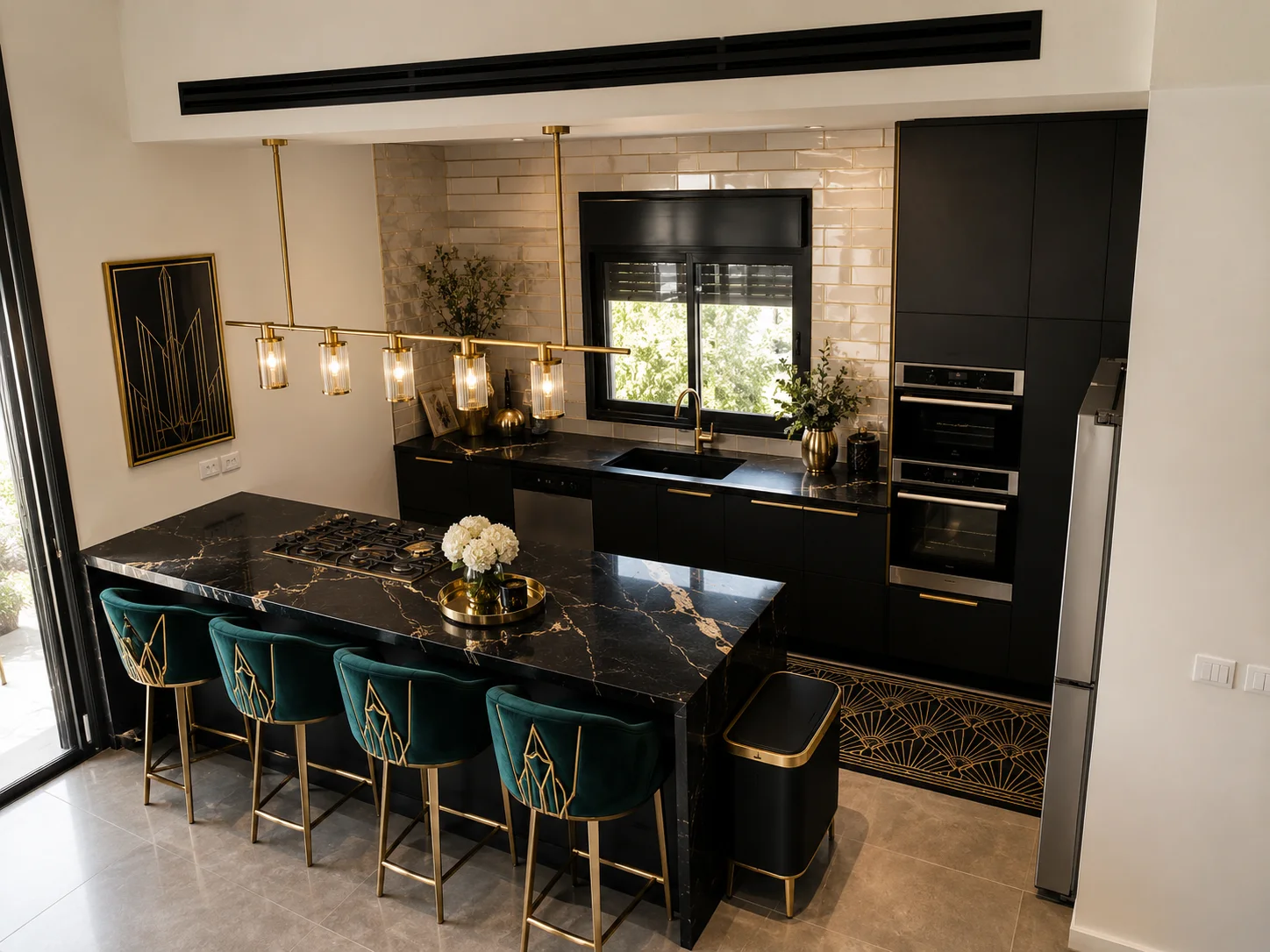
This is the most dramatic style in the experiment.
Black. Gold. Deep green. Glossy stone. Theatrical lighting. Geometry.
Would I do my kitchen like this tomorrow morning?
Probably not.
But that’s exactly the point.
Sometimes we need to see the edges to understand where we stand. Art Deco Glam shows how far you can take the same space without changing its structure. And it also helps you understand why you’re not going there.
The prompt:
Transform the existing room in the image into an Art Deco Glam interior. Preserve the original architecture, room layout, walls, windows, doors, ceiling height, camera angle, and perspective. Redesign only the furniture, decor, lighting mood, color palette, and material finishes.

Use elegant geometric furniture, rich velvet upholstery, marble or polished stone surfaces, dark lacquered wood, brushed brass accents, sculptural statement lighting, decorative mirrors, patterned rugs, and a refined palette of cream, black, emerald, deep navy, burgundy, and gold. The room should feel glamorous, cinematic, sophisticated, and timeless. Use dramatic natural daylight with soft shadows and subtle reflections to emphasize the richness of the materials. The final image should be photorealistic, like a high-end editorial interior photograph.

Avoid changing the structure of the room, avoid excessive ornamentation, avoid making it look like a hotel lobby, avoid clutter, and avoid fake CGI-looking gloss.
8. Coastal Modern
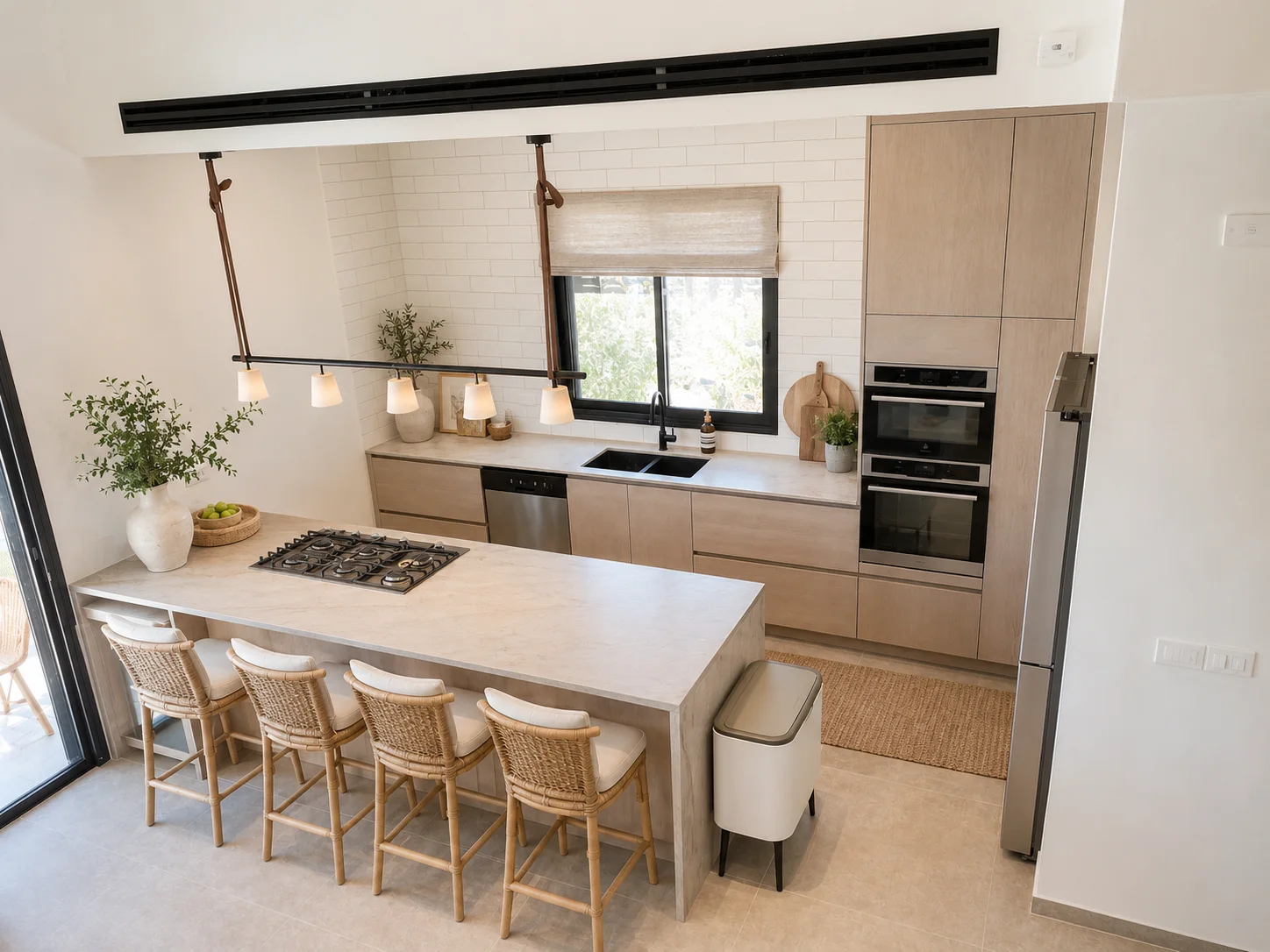
After Art Deco, this style feels like a breath.
Bright. Soft. Light. Unforced.
Lots of white, light wood, rattan, natural textures, and the feel of a home near the sea - even if it’s not actually near the sea.
What I like here is it doesn’t get kitschy. No seashells. No anchors. No overdone blue. (ChatGPT read 2024 Instagram. It knows.)
The prompt:
Transform the existing room in the image into a Coastal Modern interior. Preserve the original architecture, room layout, walls, windows, doors, ceiling height, camera angle, and perspective. Redesign only the furniture, decor, lighting mood, color palette, and material finishes.

Use soft white and sandy beige tones, light oak or weathered wood, linen upholstery, rattan or woven accents, natural fiber rugs, subtle blue-gray details, ceramic decor, simple modern furniture, and airy window treatments. The room should feel bright, relaxed, fresh, elegant, and quietly luxurious. Use soft natural daylight with gentle shadows to create an open, breezy atmosphere. The final image should be photorealistic, like a high-end coastal interior magazine photograph.

Avoid changing the structure of the room, avoid nautical clichés, avoid seashell clutter, avoid overly blue styling, and avoid artificial-looking materials.
So what did I learn?
First of all, it works.
Not perfect. Not precise at the level of an execution plan. Not something you can send to a carpenter tomorrow.
But as a tool for visual thinking? It’s very strong.
Because suddenly you’re not talking about design in the air. You’re seeing it. You can compare. You can feel. You can understand what pulls you and what doesn’t.
Before you buy materials. Before you start meetings. Before you spend money.
ChatGPT doesn’t replace an interior designer. It doesn’t measure your home. It doesn’t check the budget. It doesn’t know if that stone really fits, if the lighting is possible, if the carpentry will cost triple what you thought.
But it can help you come in more prepared. With a direction. With a language. With images that convey a feel. With a better understanding of what you like.
And that’s not nothing.
The general prompt - save it
If you want to try this yourself, don’t start with just the style name.
Give the model boundaries. Tell it what to keep. Tell it what to change. Tell it which materials to work with. Tell it what you want it to feel like. And tell it what to avoid.
Basic template:
Transform the existing room in the image into a [STYLE NAME] interior. Preserve the original architecture, room layout, walls, windows, doors, ceiling height, camera angle, and perspective. Redesign only the furniture, decor, lighting mood, color palette, and material finishes.

Use [MATERIALS], [FURNITURE TYPES], [COLOR PALETTE], and [DECOR DETAILS]. The room should feel [MOOD WORDS]. Use realistic natural lighting that enhances material texture and depth. The final image should be photorealistic, like a high-end editorial interior photograph.

Avoid changing the structure of the room, avoid unrealistic proportions, avoid clutter unless stylistically relevant, and avoid artificial CGI-looking textures.
The bottom line
The most interesting thing here isn’t that ChatGPT can generate pretty images. We’ve seen that.
What’s interesting is it can help us think. Before a renovation, before a purchase, before a big decision.
To take a real space from our lives and ask: what else could it be?
Sometimes that’s all it takes to start understanding what we really want.